
Зміст
The demand for mental health care across the United States continues to outpace the available supply of qualified psychiatric professionals. Many facilities — from rural hospitals to correctional institutions — struggle to provide patients with timely access to psychiatric expertise. Modern telepsychiatry services address this gap by connecting patients and organizations with licensed psychiatric providers through secure video technology, regardless of physical location. Providers such as FasPsych deliver this care to a wide range of settings across the country. Understanding how this model works is valuable for any organization or individual seeking reliable access to psychiatric care in a system stretched thin by chronic provider shortages.
Why Telepsychiatry Matters Today
The shortage of psychiatric professionals is one of the most pressing challenges in American health care. Many regions, particularly rural and underserved areas, have few or no practicing psychiatrists within reasonable distance. This leaves patients without access to the specialized care they need, often at moments when timely intervention matters most.
Telepsychiatry helps solve several practical problems:
- limited availability of psychiatrists in rural and remote areas;
- long wait times for psychiatric appointments at many facilities;
- difficulty staffing psychiatric positions in smaller institutions;
- barriers to care for patients with mobility or transportation challenges;
- gaps in coverage during nights, weekends, and emergencies;
- the high cost of maintaining full-time psychiatric staff.
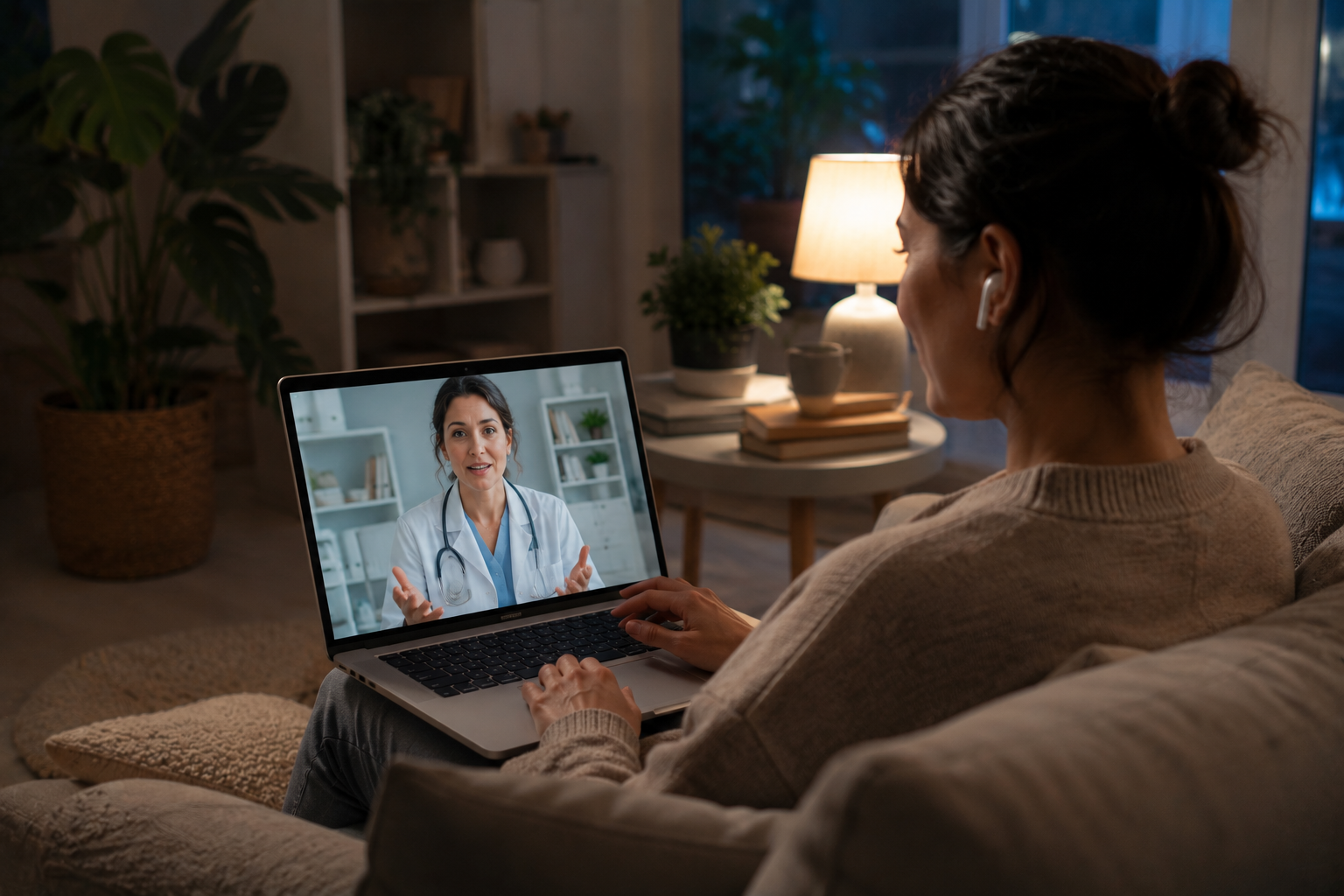
By delivering care through secure video conferencing, telepsychiatry removes geographic barriers entirely. A patient in a remote clinic can connect with a qualified psychiatrist hundreds of miles away, receiving the same quality of evaluation and treatment they would in person. This dramatically expands access for populations that would otherwise go without specialized psychiatric care for extended periods.
A Solution for Diverse Settings
Telepsychiatry serves a remarkably broad range of environments. It is commonly used within hospitals, emergency departments, community mental health centers, correctional facilities, residential treatment centers, schools, and colleges. The model also integrates well with existing counseling practices that need psychiatric backup for medication management. This versatility makes it a practical solution across the entire spectrum of organizations that require psychiatric expertise but cannot maintain it on staff full time.

How Telepsychiatry Works in Practice
The core of telepsychiatry is the real-time video connection between a licensed psychiatric provider and a patient. Modern platforms use encryption that meets HIPAA requirements, ensuring patient privacy is fully protected throughout each session. The experience closely mirrors a traditional in-person visit in clinical substance.
A typical telepsychiatry engagement includes several components:
- Comprehensive psychiatric evaluation conducted over secure video.
- Diagnosis and development of an individualized treatment plan.
- Medication management with electronic prescribing when indicated.
- Ongoing monitoring of treatment progress over time.
- Coordination with other members of the patient’s care team.
- Documentation and reporting to the partnering organization.
The evaluation process is thorough. A psychiatrist or psychiatric nurse practitioner conducts a patient interview, reviews medical records, and gathers history from relevant sources before forming a clinical assessment. When medication is clinically appropriate, providers can issue electronic prescriptions directly to the patient’s pharmacy, making the process convenient while ensuring accuracy. This comprehensive approach maintains the clinical standards of traditional psychiatry within a remote delivery model.
The Role of Hybrid Models
While fully remote care works well in many situations, some patients and organizations benefit from a blended approach. Hybrid telemedicine combines video-based sessions with in-person visits, giving organizations flexibility to match the care model to each patient’s needs. Some patients are seen entirely over video, while others receive a combination of remote and face-to-face care. This flexibility allows facilities to optimize both access and clinical appropriateness, recognizing that different situations call for different delivery methods.
Choosing the Right Telepsychiatry Partner
Organizations evaluating telepsychiatry options should consider several factors that distinguish quality providers. Not all services operate the same way, and the differences matter significantly for both clinical outcomes and operational efficiency.
Key considerations when selecting a provider:
- the qualifications and licensing of the psychiatric providers;
- whether you receive a consistent dedicated provider or a rotating pool;
- the breadth of services offered beyond basic consultations;
- the range of provider types available for different needs;
- technology compatibility with your existing systems;
- the availability of coverage when you need it;
- flexibility in staffing and scheduling arrangements.
One important distinction among telepsychiatry companies is whether they function as a call center or provide dedicated providers. Quality services pair organizations with a consistent provider who builds long-term relationships within the facility, rather than connecting patients to whoever is available at the moment. This continuity matters enormously in psychiatric care, where the therapeutic relationship and familiarity with patient history directly affect treatment outcomes. A consistent provider understands the nuances of each case in a way that a rotating roster simply cannot.
Provider Types and Flexibility
A strong telepsychiatry partner offers access to various provider types matched to specific needs. This may include adult psychiatrists, child and adolescent psychiatrists, psychiatric nurse practitioners, advanced practice registered nurses, and dual-licensed providers. Organizations can assemble a team combining different specialists based on their patient population. This flexibility extends to staffing arrangements as well, allowing facilities to pay only for the time providers spend interacting directly with patients rather than maintaining costly full-time positions.
Benefits for Organizations and Patients
The advantages of telepsychiatry extend to both the organizations that adopt it and the patients who receive care through it. Understanding these benefits helps clarify why the model has grown so rapidly across the health care landscape.
Telepsychiatry offers meaningful advantages:
- expanded access to psychiatric care in underserved areas;
- reduced wait times for evaluations and treatment;
- cost savings compared to full-time psychiatric staff;
- continuity of care through dedicated providers;
- flexible coverage including on-demand and crisis support;
- integration with existing care teams and systems;
- maintained privacy through secure, compliant technology.
For organizations, the cost structure is particularly attractive. Rather than bearing the expense of a full-time psychiatric position, facilities pay only for the actual time providers spend with patients. This makes specialized psychiatric expertise accessible even to smaller institutions with limited budgets. For patients, the benefits are equally significant — they gain access to qualified care that might otherwise be entirely unavailable in their area, often with shorter wait times than traditional in-person psychiatry.
Telepsychiatry represents a meaningful advancement in making mental health care more accessible across the United States. Organizations seeking to expand their psychiatric capabilities should evaluate partners carefully, prioritizing provider qualifications, continuity of care, and flexibility to match their specific needs. As mental health demand continues to grow and provider shortages persist, this model offers a practical path to delivering quality psychiatric care wherever and whenever it is needed. For any facility struggling to provide adequate psychiatric coverage, exploring a telepsychiatry partnership is a worthwhile step toward closing the gap between the care patients need and the resources currently available.

